22
Sep
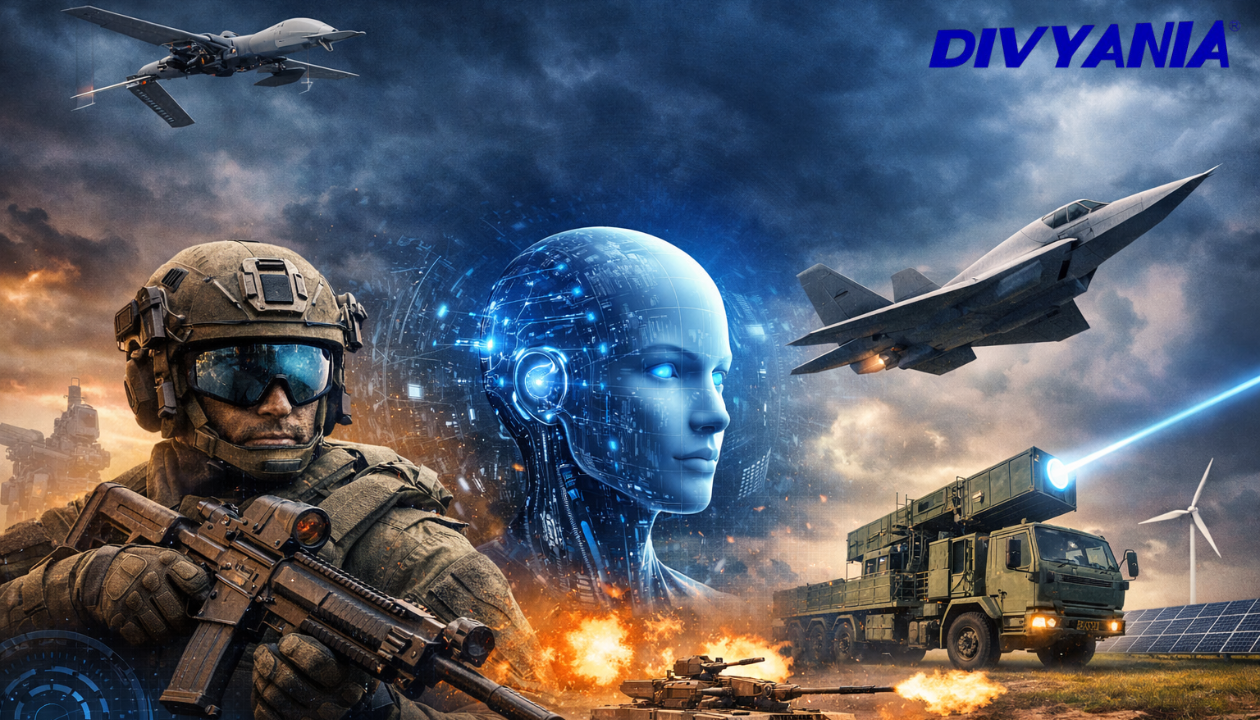
In today’s rapidly transforming world, warfare is no longer defined by physical strength alone—it’s defined by intelligence, automation, and precision. The future of defence is unfolding through technologies that think, see, and respond faster than human reflexes. Artificial Intelligence (AI), Unmanned Aerial Vehicles (UAVs), and Anti-Drone Systems have become the backbone of this transformation, shaping a new era of global security and tactical superiority.
As nations modernize their armed forces and private defence manufacturers innovate, the convergence of smart systems, autonomous machines, and advanced communication is redrawing the battle map. This evolution is not just about upgrading equipment—it’s about redefining strategy, speed, and situational control.
Artificial Intelligence has transitioned from a support tool to a strategic asset in defence. From predictive threat detection to autonomous combat systems, AI empowers militaries to act with precision and foresight.
AI-driven analytics allow decision-makers to interpret battlefield data in real time—filtering intelligence from satellites, sensors, and UAVs. What once took hours of human analysis can now be achieved in seconds.
AI’s Core Applications in Defence
In essence, AI is not replacing soldiers—it’s empowering them. It provides clarity amid chaos, translating data into decisive action, and minimizing human casualties through smarter responses.
UAVs: The Eyes, Ears, and Wings of the Battlefield
Unmanned Aerial Vehicles have revolutionized reconnaissance and combat missions across the globe. What began as simple observation platforms has evolved into fully functional airborne systems capable of surveillance, mapping, and tactical strikes.
Applications of UAVs in Defence
Divyania INC’s UAV line, including the DIA 10 Pro Thermal Imaging Edition, DIA 17 Pro, and DIA 19 Pro, represents this evolution. Each model is engineered for different operational environments—ranging from agricultural mapping and surveillance to advanced military-grade missions. With 3-axis brushless gimbals, thermal sensors, and extended flight times, these UAVs enable real-time data-driven decisions.
The next phase in UAV evolution lies in AI-integrated swarms—fleets of drones communicating through autonomous algorithms to coordinate attacks or reconnaissance missions without direct human input. This represents the beginning of machine teamwork in warfare.
Anti-Drone Systems: The Shield Against Rogue Eyes
As drones become more accessible, so does the threat of their misuse. From espionage to unauthorized aerial surveillance, rogue drones can compromise border security, reveal military secrets, or even carry explosives. Hence, anti-drone systems are no longer optional—they’re essential.
How Anti-Drone Systems Work
Anti-drone systems combine AI-driven radar, radio-frequency jammers, and kinetic interceptors to detect, track, and neutralize hostile UAVs. They identify unique drone signatures—like frequency, flight patterns, and altitude—to differentiate between friend and foe.
AI-Enhanced Detection: Machine learning enables systems to improve accuracy with every detection.
Electronic Countermeasures: RF jammers disrupt communication between drones and operators.
Physical Interception: Laser or projectile-based interceptors eliminate drones that breach perimeter defences.
As drone warfare grows, the counter-drone industry is scaling rapidly. Defence firms like Divyania are integrating AI with radar and signal intelligence to offer faster, smarter response systems. The goal: establish autonomous defence perimeters capable of independent threat neutralization.
No modern defence technology can function without reliable power. From UAVs and anti-drone systems to field electronics and electric vehicles, energy defines operational endurance.
Energy Storage & Defence Efficiency
Divyania’s Energy Storage Solutions (ESS) and lithium battery systems are designed for tactical use, offering:
Future combat vehicles, including electric and hybrid armored units, are being powered by intelligent battery systems that self-monitor temperature, output, and lifespan—ensuring soldiers can depend on their equipment, not worry about it.
The battlefield of the future will not rely solely on manpower—it will depend on machine intelligence, data superiority, and interconnected ecosystems.
Expect to see:
The fusion of these technologies will lead to what analysts call "Network-Centric Warfare"—a strategy where information and speed outweigh traditional weaponry.
The defence industry stands at the edge of a new revolution—one powered by intelligence, energy, and connectivity. AI ensures precision, UAVs extend vision, anti-drone systems secure the skies, communication networks link every unit, and energy storage solutions power it all.
But with great innovation comes great responsibility. The key lies not only in developing advanced systems but in ensuring ethical, sustainable, and secure integration across every level of national security.
As Divyania continues to innovate across UAVs, defence communication, AI systems, and energy solutions, one truth remains clear:
The future battlefield will not just be fought—it will be intelligently orchestrated.
Reach Us