22
Sep
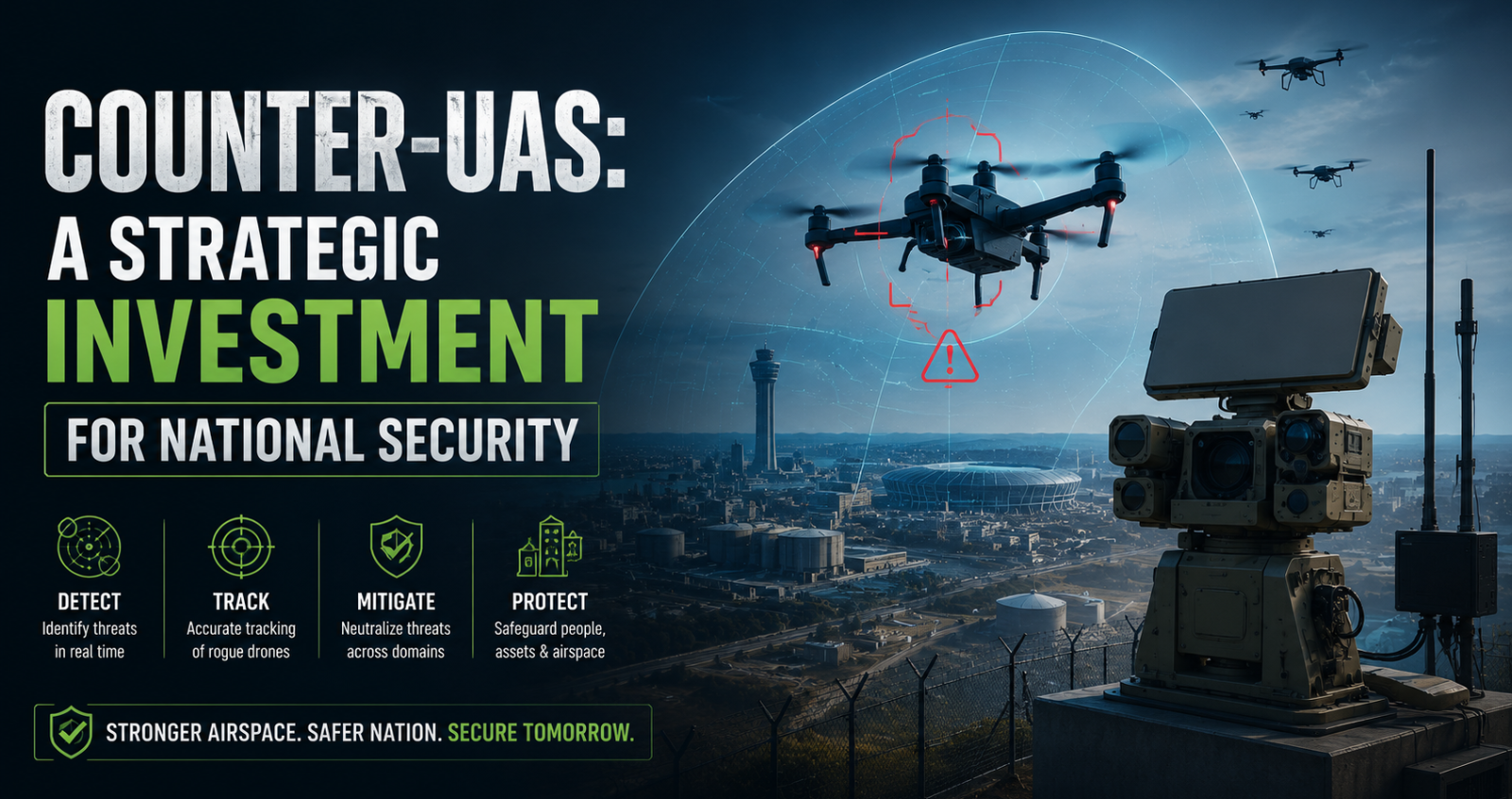
The rapid adoption of drones has transformed industries ranging from agriculture and logistics to surveillance and emergency response. However, the same technology has also introduced significant security challenges. Unauthorized drones are increasingly being used for espionage, smuggling, surveillance, and attacks on critical infrastructure. As these threats continue to evolve, governments and security agencies worldwide are prioritizing investments in Counter-UAS capabilities.
A modern anti drone system is no longer a specialized military asset-it has become a critical component of national security strategies. From protecting airports and military bases to safeguarding public events and critical infrastructure, Counter-UAS technologies provide an effective defense against unauthorized aerial threats.
Commercial drones have become more affordable, accessible, and technologically advanced. While they offer numerous benefits, they also create vulnerabilities that can be exploited by malicious actors.
Today's drone-related threats include:
Traditional security systems are designed to monitor threats on land and in the air at higher altitudes. Small drones operate at low altitudes, making them difficult to detect using conventional radar systems. This capability highlights the need for dedicated counter drone system solutions designed specifically for low-flying unmanned aerial vehicles.
A counter uav system is an integrated security solution that detects, identifies, tracks, assesses, and neutralizes unauthorized drones before they can pose a threat.
Unlike conventional air defense systems, Counter-UAS platforms are engineered to detect small, fast-moving drones that may evade traditional surveillance technologies.
Most modern systems integrate multiple technologies, including:
The objective is to provide security personnel with early warning and controlled mitigation options while minimizing disruption to legitimate drone operations.
National security agencies face increasingly complex aerial threats. Drones can bypass physical barriers, access restricted airspace, and collect sensitive intelligence with minimal risk to operators.
Investing in anti drone technology enables governments to strengthen security in several critical areas.
Protecting Military Installations
Military bases frequently face surveillance attempts by hostile drones. Counter-UAS systems provide continuous monitoring and rapid response to unauthorized aerial activity, reducing operational risks.
Securing Critical Infrastructure
Power plants, oil refineries, communication networks, and government buildings represent high-value targets. An effective anti drone defense system helps prevent disruptions and safeguards essential services.
Airport Security
Unauthorized drones have caused numerous airport shutdowns worldwide, resulting in flight delays, financial losses, and safety concerns. Counter-UAS solutions enable rapid drone detection and controlled threat mitigation while maintaining aviation safety.
Border Protection
Border security agencies increasingly rely on Counter-UAS technologies to detect drones used for smuggling contraband, weapons, and illegal surveillance across national boundaries.
An effective Counter-UAS platform combines multiple layers of detection and response.
Detection is the first step in drone defense. Modern systems employ radar, RF sensors, acoustic sensors, and electro-optical cameras to identify drone activity across various environmental conditions.
Multi-sensor detection significantly improves accuracy while reducing false alarms.
Once detected, the drone's location, flight path, speed, and operator signals are analyzed.
Artificial Intelligence enhances classification by distinguishing between authorized drones, birds, and other aerial objects.
After confirming a threat, operators can deploy suitable countermeasures depending on operational requirements and regulatory frameworks.
Common mitigation techniques include:
Each approach is selected based on the threat level, operating environment, and legal compliance.
Counter-UAS capabilities extend beyond military operations. They are increasingly adopted across civilian and commercial sectors.
Defense and Homeland Security
Military organizations use Counter-UAS systems to secure operational zones, command centers, ammunition depots, and forward bases.
Critical Infrastructure
Energy facilities, water treatment plants, nuclear installations, and telecommunications infrastructure require continuous protection against unauthorized drone activity.
Airports and Aviation
Airports implement anti drone solutions to prevent runway disruptions and ensure passenger safety.
Government Facilities
Parliament buildings, embassies, research centers, and administrative headquarters benefit from proactive drone detection and response capabilities.
Public Events
Large gatherings, sporting events, political rallies, and international summits require aerial security to protect attendees from potential drone-based threats.
A comprehensive Counter-UAS strategy offers long-term operational and security advantages.
Enhanced Situational Awareness
Real-time monitoring enables security teams to identify aerial threats before they escalate.
Improved Response Time
Automated detection and AI-assisted analysis reduce decision-making time during security incidents.
Infrastructure Protection
Sensitive assets remain protected from surveillance, sabotage, and unauthorized drone operations.
Reduced Operational Risk
Early detection minimizes disruption to airports, military operations, industrial facilities, and public events.
Scalable Security
Modern Counter-UAS platforms can be deployed across fixed installations, mobile units, and temporary security environments.
Regulatory Compliance
Advanced systems support controlled threat mitigation while aligning with national aviation and security regulations.
Drone technology continues to evolve, driving innovation in Counter-UAS capabilities.
Emerging developments include:
As drone swarms and autonomous UAVs become more common, next-generation Counter-UAS solutions will focus on faster detection, intelligent decision-making, and coordinated response mechanisms.
Governments are also increasing investments in integrated airspace management systems that combine traditional air defense with specialized drone detection technologies.
The increasing use of drones has created new challenges for national security, defense organizations, and critical infrastructure operators. Conventional security measures alone are no longer sufficient to address the growing complexity of unmanned aerial threats.
Investing in a modern anti drone system provides organizations with the ability to detect, track, identify, and neutralize unauthorized drones before they can cause harm. Whether protecting military facilities, airports, borders, government buildings, or public events, a comprehensive counter drone system delivers enhanced situational awareness and faster threat response.
As drone technology advances, adopting innovative anti drone technology, robust counter uav system, platforms, reliable anti drone defense system capabilities, and scalable anti drone solutions will be essential for strengthening national security and ensuring resilient airspace protection against future threats.
Reach Us