22
Sep
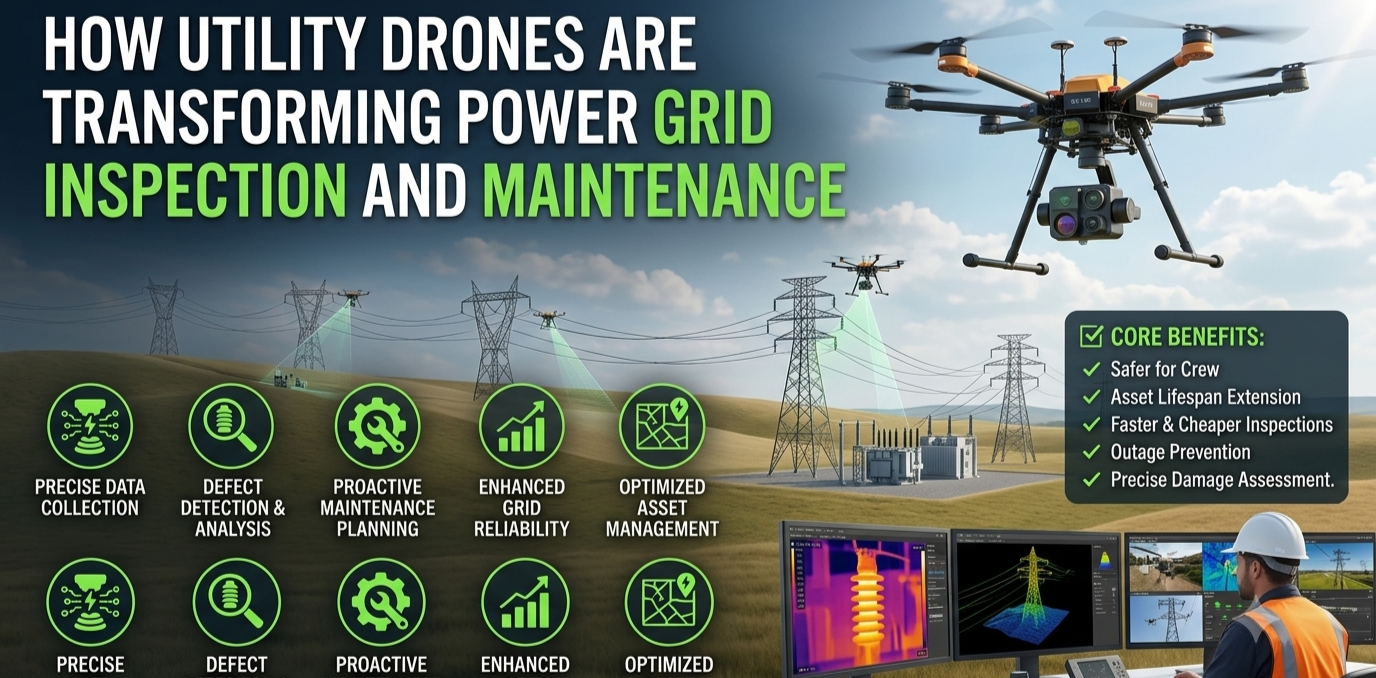
Power utilities are responsible for maintaining large and widely spread networks of transmission lines, distribution feeders, substations, poles, and towers. Keeping this infrastructure reliable requires regular inspection, timely maintenance, and a fast response when something goes wrong. Traditionally, this work has relied on ground patrols, climbing crews, and helicopters, which can be slow, costly, and physically demanding.
Unmanned aerial systems are changing that approach. A Utility UAV can capture detailed visual and thermal data from a safe distance, cover long corridors quickly, and reach locations that are difficult to access on foot. Drone adoption is not only about replacing older methods. It is about giving utilities better information so they can plan maintenance with more confidence.
This guide explains how drones are transforming power grid inspection and maintenance, and what utilities should consider when evaluating utility drone solutions.
UAV for utility inspection involves using unmanned aircraft equipped with cameras and sensors to examine power grid assets such as conductors, insulators, towers, poles, and substation equipment. Unlike a one-time survey, drone inspection can become a repeatable process. Data collected at regular intervals can be compared over time to identify changes, track wear, and prioritize maintenance work.
The first step is to define what needs to be inspected. Transmission line patrols, distribution network checks, substation surveys, and vegetation monitoring each have different requirements. Understanding these needs helps utilities choose the right aircraft, sensors, and workflows.
Power networks often stretch across long distances and difficult terrain. Inspecting them on foot or by vehicle can take considerable time, especially in remote areas.
A drone can follow a line corridor and capture consistent imagery along the route. This allows teams to review large sections of the network faster and focus field resources on the locations that actually need attention.
Working near energized equipment or at height carries real risk. Drones allow inspectors to examine assets from a distance without climbing structures or approaching hazardous equipment.
This does not remove the need for skilled personnel. Instead, it lets crews use aerial data to decide where physical intervention is required, reducing unnecessary exposure to dangerous conditions.
The quality of inspection data has a direct effect on maintenance decisions. Modern UAV utility drones can carry a range of sensors, including:
Visual cameras can reveal physical damage such as cracks, corrosion, or damaged hardware. Thermal sensors can help identify components that are running hotter than normal, which may indicate a developing fault.
One of the biggest advantages of drone-based inspection is the ability to spot issues before they turn into outages. Loose connections, deteriorating insulators, and overheating components may not be obvious from the ground.
Regular drone inspections build a record of asset condition over time. Utilities can use this history to move from reactive repairs toward planned, condition-based maintenance, which can improve reliability and make better use of maintenance budgets.
Trees and vegetation growing close to power lines are a common cause of interruptions. Monitoring clearance across a large network can be difficult using traditional methods.
Drones equipped with cameras or LiDAR can help identify encroachment and measure clearance along a corridor. This information allows teams to prioritize trimming work where it matters most.
After severe weather, utilities need to understand damage quickly so they can restore service safely. Roads may be blocked and access to some areas may be limited.
An unmanned aircraft can provide rapid aerial views of affected lines and equipment, helping crews assess damage and plan repairs. Faster situational awareness can support faster and better-organized restoration efforts.
Substations contain complex and valuable equipment where problems can affect large numbers of customers. Drones can capture close-up imagery and thermal data of transformers, breakers, and other components without interfering with operations.
Repeated inspections from consistent flight paths make it easier to compare conditions over time and spot changes early.
Modern inspection drones increasingly support automated flight planning, repeatable inspection routes, and software that helps analyze the data collected.
AI-assisted analysis can help flag potential defects in large image sets, saving reviewers time. However, human oversight remains important. Skilled engineers should validate findings and make the final maintenance decisions.
Inspection data is most useful when it connects to the systems utilities already use. Important integration areas include:
Strong integration helps ensure that findings move smoothly from the field to the teams responsible for repairs.
Drone programs can help reduce reliance on more expensive inspection methods and make better use of skilled staff. Faster data collection, fewer unnecessary site visits, and earlier detection of problems can all contribute to operational savings.
The full value depends on how the program is planned, how well the data is used, and how reliably the equipment performs over time.
Selecting the right platform requires more than comparing specifications. Utilities should evaluate:
Effective grid inspection requires a balance between coverage, sensor capability, endurance, reliability, and data quality. Divyania provides advanced UAV solutions designed for applications including surveillance, monitoring, threat detection, and infrastructure inspection.
Its platforms incorporate technologies such as AI-driven navigation, multi-sensor payloads, long-endurance capabilities, and advanced communication systems, helping utilities address demanding inspection and maintenance requirements across large and complex networks.
Drones are changing how power grids are inspected and maintained. From faster coverage and safer field work to early fault detection and quicker storm response, an unmanned aircraft can give utilities clearer, more timely information about the condition of their assets.
The right solution is not necessarily the one with the highest specifications. Utilities should choose a platform that matches their mission needs, operating environment, existing systems, and long-term maintenance goals. With a well-planned program, aerial inspection can help utilities improve reliability, protect field teams, and manage their infrastructure more effectively.
Reach Us