23
Oct
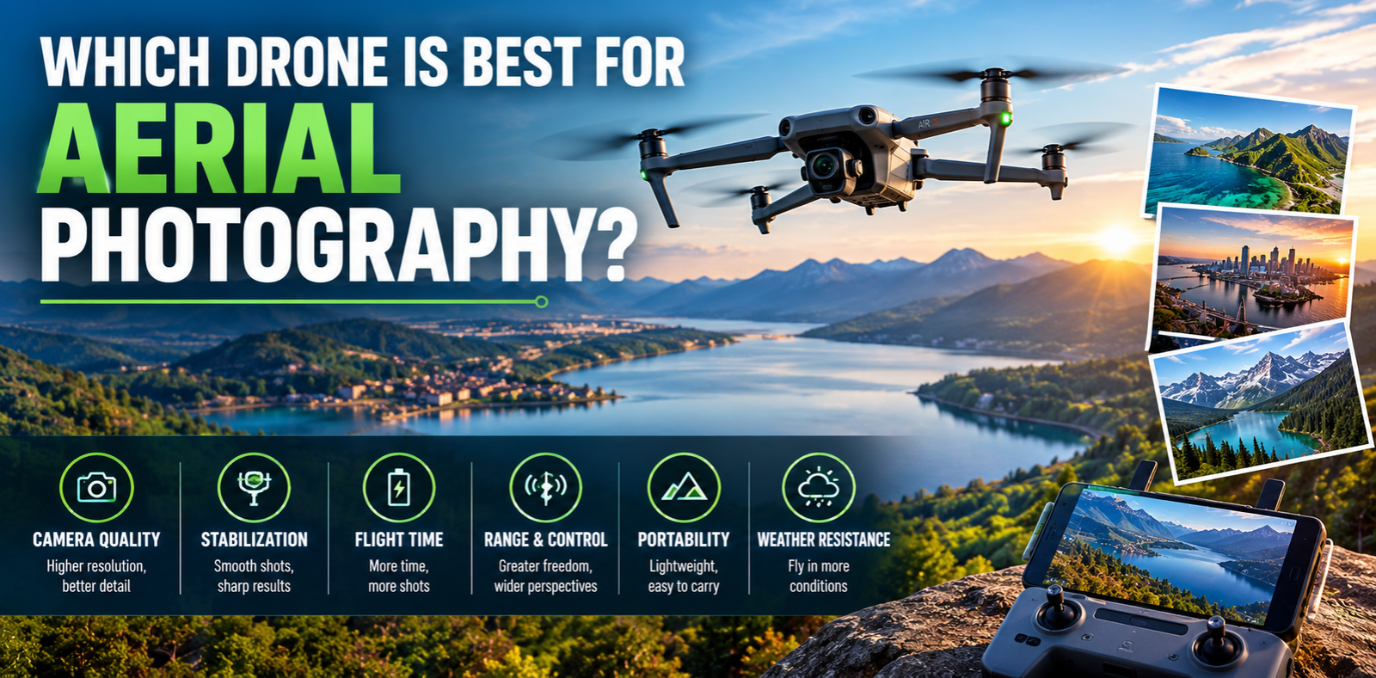
Aerial photography allows photographers to capture landscapes, buildings, roads, farms, and natural environments from unique perspectives. Whether you are a travel creator, professional photographer, real estate agent, or hobbyist, choosing the right drone can make a significant difference in image quality and shooting flexibility.
The best drone depends on your budget, experience, camera requirements, and intended use. Some models prioritise portability and ease of use, while others offer advanced cameras, longer flight times, and greater creative control. Understanding these features helps you choose a drone that matches your photography needs.
Before selecting a model, consider the features that directly affect image quality and flight performance.
Camera resolution determines how much detail an image can capture, but megapixels are not the only factor. Sensor size also influences image quality, dynamic range, and performance in challenging lighting conditions. A larger sensor can be especially useful for sunrise, sunset, and landscape photography.
A mechanical gimbal helps keep the camera steady while the drone moves. This is important for capturing sharp photographs and smooth video footage, particularly when flying in light wind.
Longer flight time gives photographers more opportunities to frame shots and explore different angles. Carrying additional batteries can also be helpful during outdoor assignments where charging facilities are limited.
GPS positioning, return-to-home functionality, and obstacle-sensing systems can make flying more manageable. However, these features do not eliminate every risk, so pilots must remain attentive and follow applicable flight rules.
The DIA19 PRO 4K Ultra HD Camera Drone is an option for users looking to capture detailed aerial photographs and videos. Its 4K camera supports high-resolution imaging, while its digital image transmission capabilities help transfer visual footage. It can be considered for landscape photography, outdoor content creation, and aerial documentation, depending on the project's requirements.
The DIA17 4K Relay Drone features 4K imaging and a 3-axis gimbal, according to its product listing. Gimbal stabilisation helps keep the camera steady during flight, supporting clearer photographs and smoother video footage. These capabilities make it worth considering for aerial photography projects involving landscapes, infrastructure, and visual documentation.
The DIA10 Thermal Imaging Drone combines thermal imaging capabilities with a 4K camera, according to its product listing. This combination can support specialised aerial observation where both visible images and thermal information are useful. Potential applications include infrastructure inspection, surveillance, and other monitoring tasks that require different types of visual data.
Each model offers different capabilities, so the right choice depends on the intended application, camera requirements, stabilisation, and operating conditions. Buyers should review the complete specifications before selecting a drone for a particular photography project.
A photography UAV should be selected according to the environment and type of images you want to capture. For travel and casual photography, a compact drone may be sufficient. For commercial assignments, a model with stronger imaging capabilities and more flexible camera controls may be a better investment.
Consider the weight of the aircraft, ease of transportation, availability of spare batteries, controller options, and manufacturer support. Also review whether the camera supports RAW photographs if you plan to edit images professionally.
An aerial photography drone should offer reliable flight stability, good image quality, and controls that allow precise framing. Features such as adjustable camera settings, subject tracking, panoramic shooting, and automated flight modes can make certain assignments easier.
However, automated features should complement photography skills rather than replace them. Lighting, composition, altitude, camera angle, and timing all influence the final result. Practising in open areas and reviewing captured images can help pilots develop better techniques.
Weather conditions also matter. Strong winds, rain, and poor visibility can affect flight safety and image quality. Always check conditions before flying and avoid operating beyond the aircraft's recommended limits.
The growing use of unmanned aerial vehicles has created demand for platforms suited to different imaging, monitoring, and operational requirements. Divyania provides UAV solutions for specialised sectors, including defence, infrastructure, and surveillance. Organisations evaluating UAV platforms should consider payload compatibility, endurance, navigation, communication systems, and the suitability of the aircraft for their intended application.
The best drone for aerial photography depends on your experience, budget, and creative goals. Divyania offers different UAV models for aerial imaging, including the DIA19 PRO 4K Ultra HD Camera Drone, the DIA17 4K Relay Drone with a 3-axis gimbal, and the DIA10 Thermal Imaging Drone. Each model offers different capabilities for aerial photography and specialised imaging applications.
Before making a purchase, compare camera quality, stabilisation, flight time, safety features, and technical specifications. Also, check the applicable drone regulations and airspace restrictions before flying. Choosing a suitable UAV can help you capture better aerial images and achieve your photography goals.
Reach Us